.svg)


Christian Marriage Advice:
Quotes & Wisdom from Emerson Eggerichs, Ph.D. & Trusted Voices
A curated collection of the latest featured guest conversations with trusted thought leaders—highlighting key takeaways and relationship advice on marriage, parenting, communication, and biblical wisdom.

What does the best marriage advice actually sound like — not in theory, but in the words of people who have spent decades helping real couples thrive?
Recently, Dr. Emerson Eggerichs has joined trusted thought leaders like Sadie Robertson Huff, Susie Larson, Christian Bevere, Janet Parshall, and others on their podcasts and radio programs for unscripted, in-depth conversations about marriage, communication, conflict, and biblical wisdom. What follows is a curated collection of the most resonant marriage advice from those exchanges — direct quotes, organized by theme, with brief context to help you apply each idea in your own relationship.
The wisdom here is not abstract. It comes from over three decades of pastoring, counseling, and biblical study, refined in conversation with leaders who have journeyed through the challenges of marriage themselves. Some of these quotes will challenge you. Others will name something you have felt for years but could not put words to.
Take what you need. Share what resonates with your spouse. And if any conversation pulls at you, the full episode is linked at the bottom of each section.
In conflict, you're allies — not enemies
“Honey, we're allies, not enemies. We are friends, not foes. We're on the same team. We're not opponents.
Now, let's have our argument.”

This is one of the most quietly transformative things Dr. Eggerichs says in the entire conversation — and it lands particularly hard because Sadie and Christian had just confessed, on air, that they spent years trapped in what Emerson calls the Crazy Cycle. They could not figure out why two genuinely loving spouses kept missing each other in conflict. The reframe Emerson offers is not a new technique. It is a posture: deciding, before the argument starts, that the person on the other side of it is still on your team. Most marital conflict spirals because we forget this in the heat of the moment. The shift is simple. Living it is the work of a lifetime.
Marriage is a brief, eternal assignment, live like it matters
"I believe that when I die... the Lord is going to look at me and say, 'Emerson, did you love Sarah? Did you love her unto me? Did you do what I commanded you to do?' Sarah's irrelevant here."

Most marriage advice operates on the assumption that the marriage itself is the goal, and that if we can just make it happier, smoother, or more romantic, we have won. Susie Larson and Dr. Eggerichs gently push back on that assumption. Marriage, in eternal terms, is a brief assignment. We are not married in heaven. The wedding feast we are heading toward is the marriage of the Lamb. That does not make our earthly marriages less important, it makes them weightier. Every act of love, every act of respect, every difficult conversation we navigate well, every moment we choose to honor our spouse when they have not earned it, these are not just marital wins — they are eternal investments. Christ Himself is watching, and He intends to reward what most of us are tempted to dismiss as small.
Honor motivates a goodwilled man more than criticism ever will
“It's amazing to me that we want to marry the perfect person, but that perfect person now will have to live with you. Do you realize the judgment you're going to come under?”
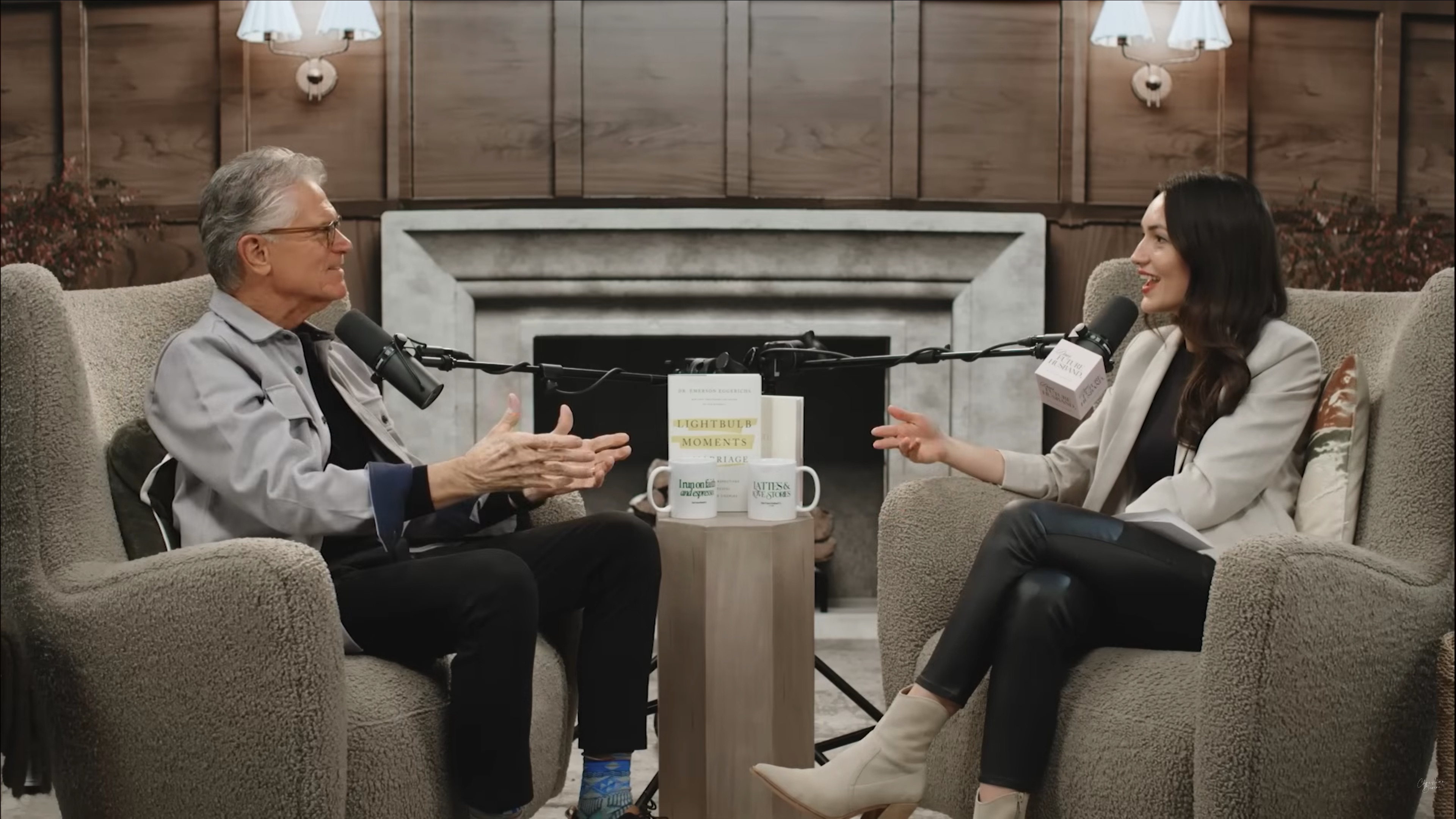
The fantasy of a perfect partner is not just unrealistic — it is uncharitable. If your spouse were as flawless as you imagine wanting them to be, the first thing they would have to confront is you. That single humbling reframe is where Dr. Eggerichs starts, and the rest of his conversation with Christian Bevere unfolds from it: honor not criticism, motivation not manipulation, what actually moves a goodwilled man to rise, and the painfully practical observation that most husbands aren't resisting their wives — they are guarding themselves against the contempt they feel coming through her words.
Withdrawal looks like hostility to her, honor to him
"In a woman's world, withdrawing is the most unloving thing you could do... it feels like an act of hostility. But in a man's world... you withdraw as an act of honor."
This is one of the most quietly destructive misunderstandings in marriage — and a pattern at the heart of what Dr. Eggerichs calls the Crazy Cycle. When a husband pulls back during conflict, he often believes he's protecting his wife from words he'll regret. She experiences his silence as abandonment. Both are responding from love, but neither realizes they're speaking different languages. The University of Washington studied this exact dynamic for twenty years and found something remarkable: in heated conflict, men's heart rates climbed to 99 beats per minute — clinical 'warrior mode' — while women's stayed normal. The men weren't being cold; they were physiologically flooded. The women weren't being hysterical; they were trying to repair a relationship they sensed slipping.
Your spouse affects you and refines you — but doesn't define you
“Sarah affects me, and she refines me — but she does not define me. My identity, my value, has to be God-given, not spouse-driven.”

This is the foundational reframe most struggling marriages never make. Most of us walk into marriage believing, somewhere underneath everything else, that our spouse is supposed to be the source of our worth. When they fail at that impossible job — and they will — we conclude something is wrong with the marriage. Janet Parshall and Dr. Eggerichs spend much of this conversation circling back to a different starting point: a spouse who is asked to define you can only ever disappoint you. A spouse who is allowed to refine you can change your life. The shift sounds subtle. In practice, it is the difference between a marriage that survives the difficult years and one that does not.
Vulnerability awakens a protector. Accusation awakens an attacker.
“My husband said: if instead of saying 'you did this,' you could just say 'you're hurting me' — instead of awakening my attack mode, it awakens my protect mode. I was like, that's the best life hack ever. Thank you for telling me 20 years in.”

This is one of the most concretely useful pieces of marriage advice anywhere on this page — and it landed on Jen mid-conversation in her own marriage, twenty years in. The instinct, when we are hurt, is to protect ourselves by attacking first. “You always.” “You never.” Both responses are honest. But one shuts the conversation down, and the other opens it. What Jen's husband identified — and what Dr. Eggerichs spends much of this conversation reinforcing — is that vulnerability triggers something in a goodwilled man that accusation never will. Naming our pain without weaponizing it is not weakness. It is one of the strongest moves a spouse can make.
It's not more talking. It's better words.
“For years I felt stuck, holding my tongue and having self-control. It felt exhausting to respect a husband who didn't always show me love in return. Then I learned something I'd never considered before: my true audience is Christ.”

There is a strange logic at work in many marriages: the belief that if we can just complain loudly enough, our spouse will finally change. Arlene Pellicane and Dr. Eggerichs gently dismantle that idea. The reframe at the heart of this conversation — distilled in the title “It's not more talking, it's better words” — is that healthy marriages are not built by saying more. They are built by saying it differently. The wife in this testimony did not get a new husband. She got a new audience. And when the audience changes, everything that exhausted her about the marriage suddenly had different weight.
When you move toward Christ, your spouse moves toward you
“As you move toward Jesus Christ, it has a way of pulling your husband toward you. Men want closeness, but they need to feel needed. If you come across as too needy, they pull away. If you become content in Christ, he is freed up to move toward you and longs to win your heart.”
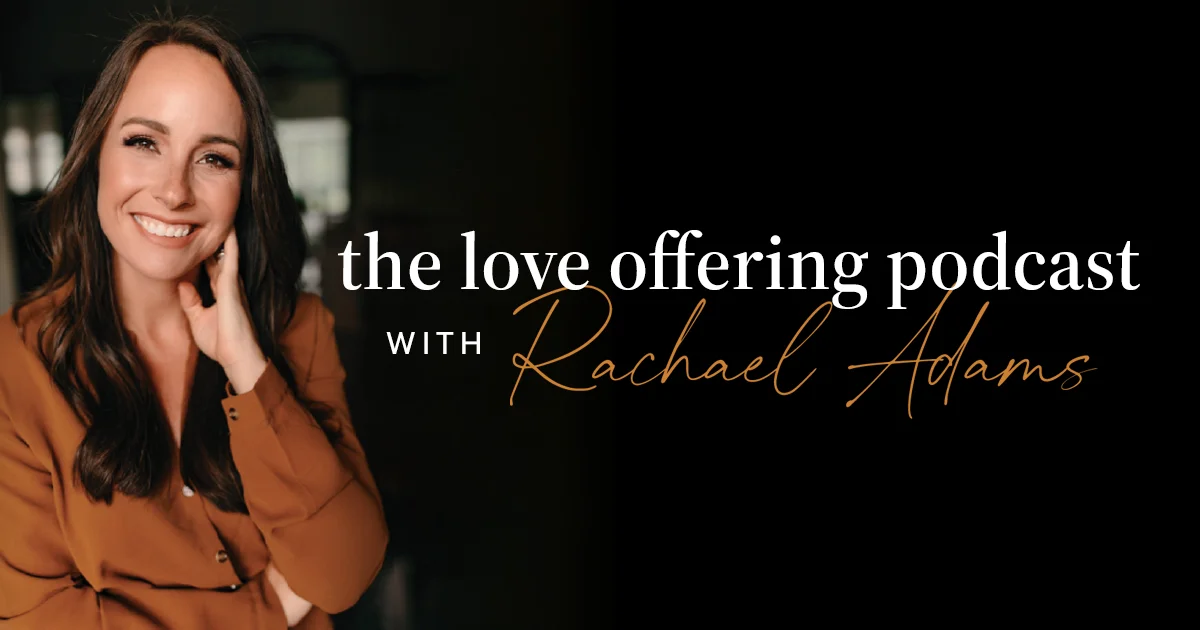
This may be the most counterintuitive piece of advice on the entire page. Most struggling wives are told the answer is to try harder: communicate more, serve more, give more. Dr. Eggerichs and Rachael Adams describe a different mechanism. When a wife stops asking her husband to be the source of her contentment and roots her contentment in Christ instead, something unexpected happens: he is finally free to be drawn toward her. Rachael describes the moment in her own marriage — expecting her husband to fill the empty void in her heart, then growing in her relationship with the Lord, and her husband suddenly asking, “wait a minute, don't you need me?” The rubber band only pulls when there is space for it to pull from.
Where she's strong, I tend to be weak — and that's the design
“Where she's strong, I tend to be weak. Where I'm strong, she tends to be weak. Instead of pointing fingers, we just rotated — because tomorrow, I'm going to be weak and she's going to be strong.”

Most marital advice operates at one of two levels: the practical (what to say, when to apologize, how to listen) or the emotional (how each spouse is wired). Karl Clauson and Dr. Eggerichs push the conversation a layer deeper. The mature marriages Emerson has watched succeed over fifty-plus years are not the ones where both spouses are equally strong everywhere. They are the ones where both spouses have stopped keeping score about it. When her strength meets his weakness today, she carries it. When his strength meets her weakness tomorrow, he carries it. The whole arrangement only works if both spouses have stopped pretending they don't need each other.
Common Threads: What These Conversations Reveal
Despite covering different angles (honor, identity, conflict, leadership, intimacy), these conversations keep returning to the same core truths. If you read closely, helpful patterns emerge.
First, identity matters more than circumstance. Whether the topic is conflict or communication, Dr. Eggerichs and his guests keep coming back to the same anchor: our worth has to be Christ-given, not spouse-driven. The marriages that thrive are not the ones with no friction, they are the ones where neither person is expecting the other to be perfect.
Second, assume goodwill before you assume malice. The single most repeated insight across these conversations is that intentional ill-will is rarely the actual cause of marital tension. Most of the pain in a relationship comes from honest misunderstanding, not from a spouse who is trying to hurt us. Believing the best changes how we respond.
Third, the same behavior can mean opposite things to husband and wife. Withdrawal, silence, criticism, even a tone of voice are all sending signals to our spouse. They get filtered through a man's wiring and a woman's wiring differently, and most conflicts spiral because both spouses think they are communicating clearly when they are not.
Fourth, marriage is ultimately an act of worship. The strongest threads in every conversation circle back to this: when we love and respect our spouse unto Christ rather than simply going through the motions of what we think is necessary, the unfair, exhausting, repetitive work of marriage suddenly has a life-giving power to it.
Fifth, every word we speak either builds trust or undermines it. The advice Dr. Eggerichs first heard as a freshman at Wheaton College: “before you speak to people, ask whether what you are about to say will build trust or undermine it,” is the through-line in nearly every conversation on this page.
The marriages that thrive are not the ones where both spouses always say the right thing. They are the ones where both spouses have learned to ask the question before they speak, and to choose, in the heat of the moment, the words that strengthen the relationship rather than the ones that score the point.
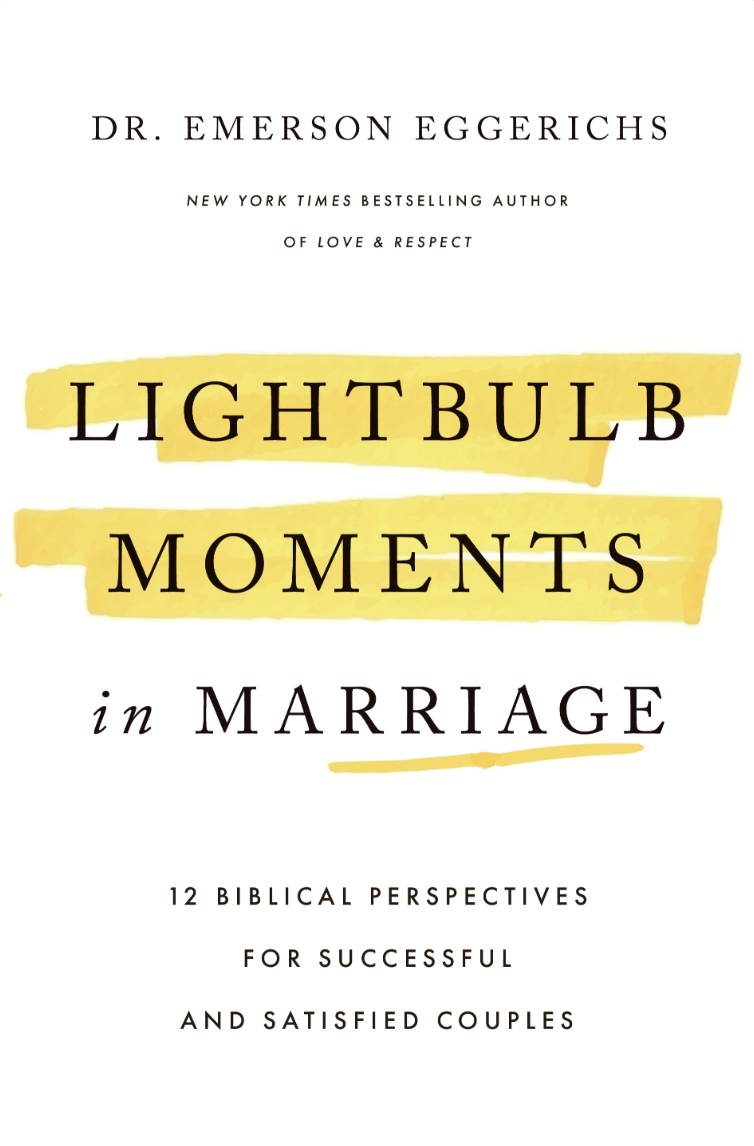
Lightbulb Moments in Marriage:
12 Biblical Perspectives for Successful and Satisfied Couples
New to Love & Respect?
Start Here!
Preview Viral Moments That Capture Emerson’s Heart, Humor, and Insight On Marriage & Relationships.
.svg)

Marriage Advice
FAQs
What is the best advice for marriage?
What does the Bible say about a healthy marriage?
What does the Bible say about submission in marriage?
What is the most common cause of conflict in marriage?
How do you fix communication in a marriage?
What is the difference between love and respect in marriage?
How can a Christian couple strengthen their marriage?
Search The Site
Does God Want Me to Divorce to Be Happy?
Emerson and Sarah Eggerichs
Dr. Emerson Eggerichs is an internationally known public speaker on the topic of male-female relationships. Based on over three decades of pastoring, counseling and study of biblical and scientific research, Dr. Eggerichs and his wife Sarah developed the Love and Respect Conference which they present to live audiences around the country.
About Love & Respect.jpg)
Collections
Articles, Podcasts, Ask Emerson on a concept or theme


Invest in Your Marriage, Family, and Christian Life
Experience deeper connection and improved communication in your marriage, family, relationships and faith with a Love & Respect membership. One year for around the price of 1 hour of counseling.
.webp)

Read weekly articles on Marriage, Parenting and Christian Life

Join Emerson weekly as he discusses marriage, family and faith!

Multi-session online courses perfect for individuals, couples and small groups in your home

Find answers to member questions on Marriage, Parenting and the Christian life.