

.svg)


.jpg)

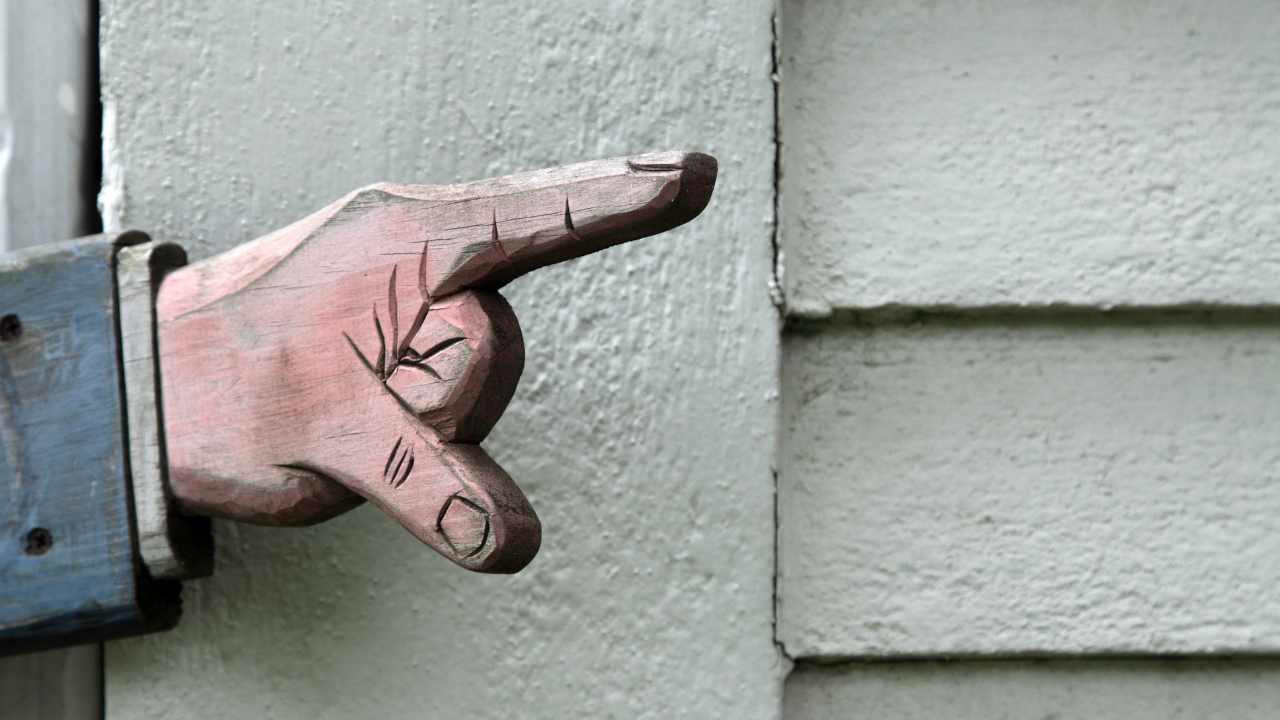


Why Does My Spouse Keep Pointing to One Incident from the Past as Proof of Who We Really Are?

.svg)

One event deserves patience. Repeated, unteachable patterns deserve discernment.
I'm speaking here of the ordinary failures and disappointments that occur in every marriage and every relationship.
Some people take a snapshot of a spouse's impatience, forgetfulness, insensitivity, or poor judgment and hold it up as though it defines the person's entire character. They elevate one regrettable episode into a permanent verdict: "This is who you are." An isolated lapse, an insensitive comment, a forgotten promise, a poor decision, is not the movie of this person's life and entire character.
This is why I have taught over the years to refrain from taking a snapshot and claiming that it represents the whole movie. Yes, a snapshot reveals a particular behavior. But only by watching the whole movie can we discern whether that behavior is an isolated lapse or part of an enduring pattern. Character is not determined by one disappointing scene but by the consistent direction of a person's life.
Let me be clear. I am not speaking here of a grievous act of immorality that requires immediate intervention. I am not saying to overlook serious evil by saying, "Don't judge a snapshot." If the snapshot is of a husband beating his wife, molesting a child, committing fraud, or some other grievous sin, that single act is itself profoundly revealing and demands an appropriate response. We are not talking about excusing the inexcusable.
There is a difference between a lapse that invites grace and a pattern that requires discernment (and an act of evil). An isolated failure calls for patience, forgiveness, and the opportunity to grow. A repeated, unteachable pattern of sinful conduct or a horrendous act of evil calls for accountability and firm action.
But what do I mean then by not taking a snapshot of an episode and claiming that's the movie of the whole person's life?
Years ago a husband wrote me about something that had happened nearly twenty years earlier. He said, "The adjustments I am making are to help her put closure to the historical issues. There is a particular one that she brings up almost daily. Last night I told her that if I could do it again, I would have done things much differently.
"You see, twenty years ago I failed to stop and get her a doughnut upon her request. I had a delivery route, and she would often come with me. I was trying to finish my route, and she wanted to make a date of it. So I finally stopped, unwillingly.
"Last night I told her that if I could afford a Dunkin' Donuts store, I would buy it for her. This made her happy. As we lay there in bed, she told me she may be able to put a closure to this."
When Sarah, my wife, first heard that story, she almost couldn't believe it. "A doughnut?" she said. "For twenty years?"
But the issue, of course, was never the doughnut. The doughnut had become a symbol. To this wife, that single moment, let me repeat, that single incident, had emerged as her weapon of choice whenever she wished to complain and criticize.
Now, perhaps there truly had been a long pattern of him putting work ahead of the relationship, and he didn't care and she didn't matter. But after corresponding with this husband, I asked him directly if there had been some major history of selfishness or neglect that explained why this incident still carried so much weight.
He told me there wasn't. He was sincerely trying to love his wife well, which is why he emailed me. He was a good-willed husband who simply wanted to love his wife well, yet after two decades, one moment continued to define him in her eyes. Even more remarkable, he was on the job that day and, despite wanting to finish his route, he still stopped to buy her the doughnut.
That's the danger of building conclusions about someone's character from a single snapshot, especially when our expectations exceed what is reasonable.
But even when a spouse acts selfishly and ignores our request, a snapshot captures that moment. Does it reveal a pattern that defines a life?
That's why wisdom asks us to slow down. One thoughtless act may reveal nothing more than fatigue, distraction, different family customs, or a simple blind spot. In this instance, the husband was not thoughtless but conscientious about doing his duty for the company.
But if the same behavior repeats itself again...and again... and again... especially after loving conversations... then we begin to see something different.
Patterns reveal character in ways isolated incidents never can.
So before concluding, "That's just who they are," ask yourself, "Am I reacting to one moment...or have I truly observed a pattern?"
That question alone can save us from unfairly labeling a good-hearted person—or, just as importantly, from ignoring a genuine pattern that wisdom should no longer overlook.
The Question That Changes Relationships
I've come to believe that one simple question has the power to prevent countless misunderstandings.
Instead of asking, "Why would they do that?" Ask, "What might explain what I just experienced?" That question doesn't make you naïve. It makes you wise. It slows your judgment just long enough to discover whether you're dealing with a selfish heart… or simply someone who never realized how their actions were being interpreted.
And once you've asked that question...(Am I reacting to one moment...or have I truly observed a pattern?") you're finally ready to decide what love and respect require next.
Remember: Scripture repeatedly urges us not to rush to conclusions. "He who gives an answer before he hears, it is folly and shame to him" (Proverbs 18:13). Likewise, "The first to plead his case seems right, until another comes and examines him" (Proverbs 18:17). Wisdom pauses long enough to hear the other person's explanation before deciding what his or her motives must have been.
Questions to Consider
- How might viewing your spouse’s actions through the lens of the full “movie” rather than isolated snapshots change your next conflict?
- When have you held onto a past incident as proof of someone’s character, and what would it look like to release it?
- Are you reacting to a one-time lapse that invites grace or to a genuine repeated pattern that requires discernment?
- What would it take for you to humbly ask your spouse for their full perspective before drawing conclusions about their heart?


